
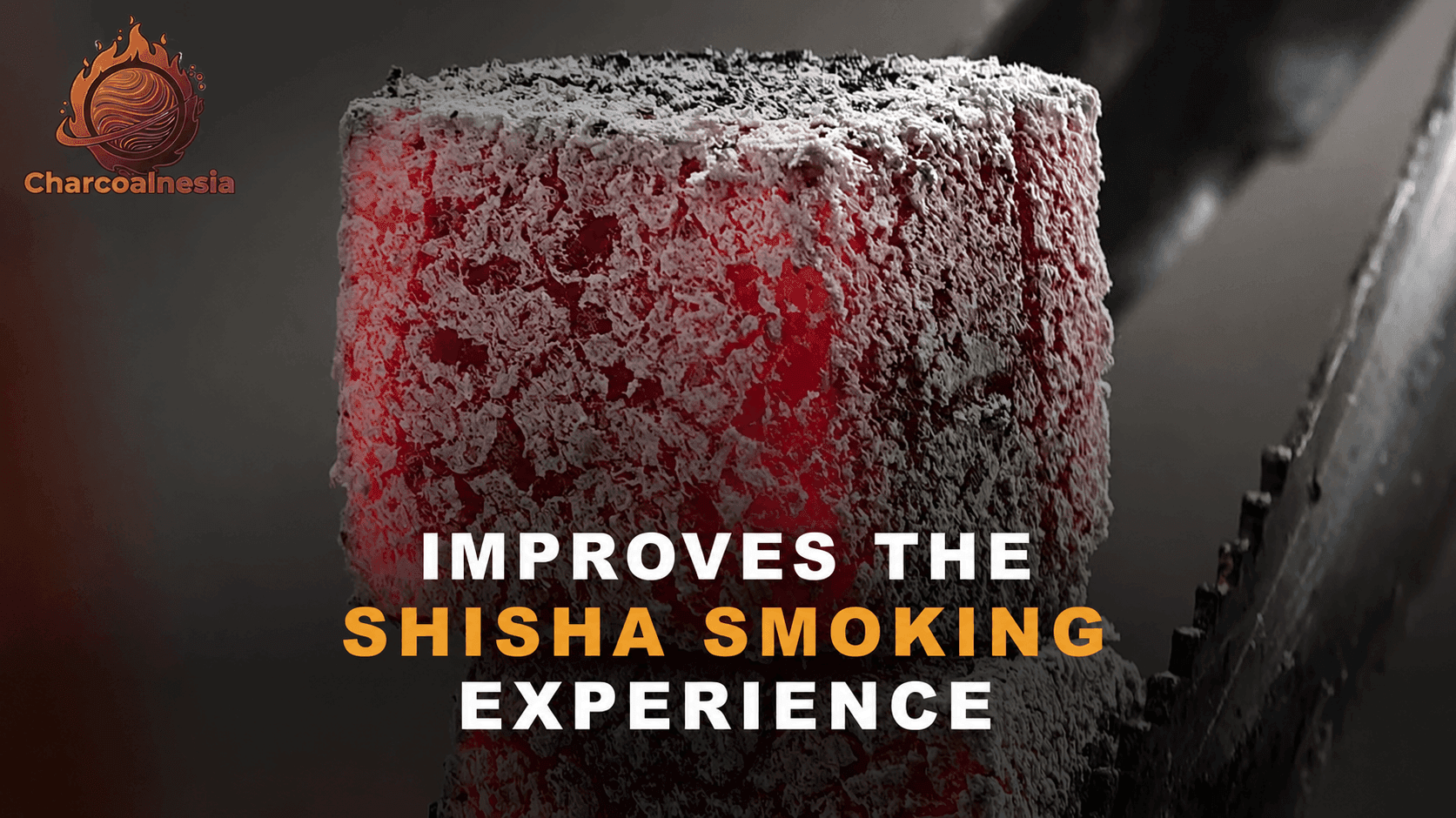
For hookah lovers around the world, coconut shell charcoal has rapidly become the preferred fuel source. Its rise to dominance in the shisha community is not a coincidence — it is rooted in measurable performance advantages. From extended burn duration to a flavor-neutral profile, coconut-based briquettes consistently outperform quick-light tablets and conventional wood charcoal.
The Core Advantage: Raw Material Quality
What makes coconut charcoal special starts with the shell itself. Coconut shells possess a naturally compact, dense cellular matrix. When subjected to controlled pyrolysis at high temperatures, these shells yield charcoal with extraordinarily high fixed carbon levels and minimal residual volatile compounds. Unlike wood which varies significantly between species and growing conditions, coconut shells deliver predictable, repeatable carbonization results batch after batch.
Chemistry That Delivers
Premium coconut shell charcoal routinely achieves 75–85% fixed carbon content. In comparison, hardwood charcoal sits around 60–70%, and quick-light products dip even lower due to chemical additives. This difference means every gram of coconut charcoal stores more usable energy — translating into hotter, longer-lasting burns with less refueling.
Real-World Performance Benefits
Exceptional Burn Duration
One of the most appreciated characteristics among shisha users is the prolonged burn time. High-quality coconut briquettes easily provide two to three hours of steady heat on a single round of coals. For lounge owners, this reduces the frequency of coal rotation, lowers per-session consumption, and frees up staff to focus on guest experience rather than constant fire management.
Stable, Uniform Heat
Temperature stability is critical for an enjoyable shisha session. Coconut charcoal maintains a flat, predictable heat curve from ignition to extinguishment. There is no sharp spike followed by a rapid drop-off — a common complaint with chemically treated quick-light products. The result is smooth, flavorful smoke from start to finish without the risk of burning the tobacco.
Minimal Ash Residue
Ash is the enemy of a clean shisha session. Excess ash clogs airflow, contaminates the bowl, and creates an unappealing mess. Premium coconut charcoal produces less than 2.5% ash — frequently under 2% for top-tier grades. Compare that to quick-light coals which commonly leave behind 10–15% ash or hardwood charcoal at 5–8%. Less ash means:
- Improved airflow around the bowl
- Fewer interruptions to dispose of ash mid-session
- Easier, faster cleanup between guests
- No gritty ash mixing into the tobacco
- Extended life of your bowl and heat management devices
Pure Taste — What You Smoke Is What You Get
Arguably the most critical factor for shisha connoisseurs is flavor integrity. Coconut charcoal combusts completely neutral — no smoke, no odor, no aftertaste. Quick-light products rely on accelerants like potassium nitrate that produce pungent fumes detectable in every draw. Even some natural wood charcoals carry aromatic residues from their source wood that subtly alter the tobacco's intended profile.
With coconut charcoal, the only thing you taste is the shisha blend exactly as the manufacturer crafted it. Every fruit note, every mint undertone, every spice accent comes through unimpeded.
Sustainability and Responsible Sourcing
Coconut shells are a genuine agricultural byproduct. After processors extract the meat for oil, milk, and desiccated coconut, billions of shells are left behind annually — material that would otherwise be burned as waste or dumped in landfills. Converting these shells into premium charcoal creates a circular economic model that:
- Eliminates agricultural waste through productive reuse
- Generates supplemental income for coconut farming communities
- Reduces the pressure on forests by substituting for wood charcoal
- Produces a fuel with a measurably lower environmental footprint
What to Look for When Buying
Not every coconut charcoal on the market meets the same standards. When evaluating products, use these benchmarks:
- Ash content — target below 2.5%, ideally under 2%
- Moisture — below 8% for reliable ignition
- Fixed carbon — above 75% for optimal energy density
- Shape uniformity — consistent dimensions ensure predictable performance
- Binder composition — only food-grade, all-natural binders, no chemicals
Final Thoughts
Switching to coconut shell charcoal is not merely changing fuels — it is elevating the entire shisha experience. Longer sessions, cleaner burning, truer flavor, and a product that respects the environment. It is no surprise the world's most discerning lounges and aficionados have embraced it as their fuel of choice.