
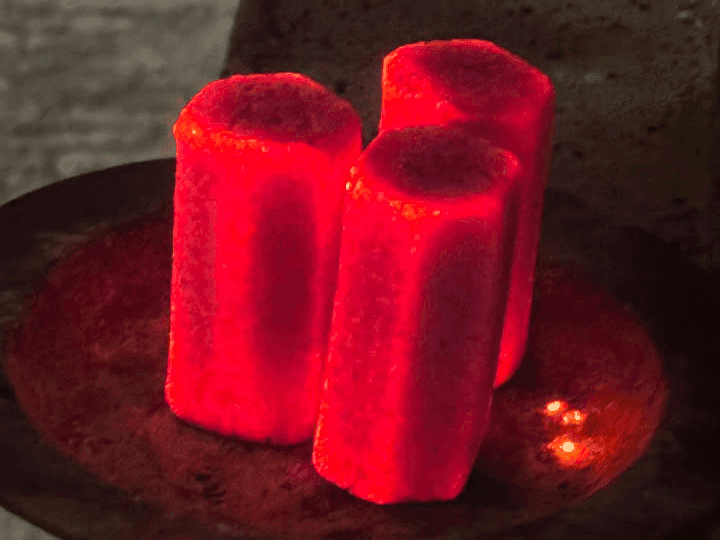
Driven by absolute purity, Charcoalnesia delivers high-performance briquettes crafted strictly from 100% natural coconut shells. Our expert-grade production caters perfectly to the precise demands of global Shisha, Hookah, and BBQ distributors. With an emphasis on extended burn duration, low white ash, and toxic-free ignition, we provide the ultimate wholesale and private label solutions designed to elevate your brand’s standards worldwide.
Burn Duration: The Standout Metric
The Difference
Shisha & Hookah Sessions: Engineered to deliver 2–3 hours of stable, high-intensity heat. Odorless and smokeless, perfectly preserving the pure flavor profile of premium shisha tobacco.
Barbeque & Grilling Sessions: Built for endurance. Our heavy-duty BBQ briquettes provide up to 6 hours+ of continuous, steady burning to handle long, professional grilling sessions.
100% Pure Coconut Guarantee: Both grades are crafted strictly from premium Indonesian coconut shells with zero chemical additives, ensuring a clean, toxic-free burn from start to finish.
Operational Economics
- Lower total fuel volume consumed per shift
- Reduced staff time spent on fire management
- Improved guest experience from fewer interruptions
Ash Production: Cleanliness Quantified
Ash is the non-combustible residue that remains after burning. It degrades airflow, contaminates tobacco, and increases maintenance workload.
- Coconut Charcoal: Below 2% — premium expert-grade quality that leaves minimal ash residue.
- Wood Charcoal: 5% to 10% — some species produce even higher levels
Impact of High Ash
- Restricted airflow through bowls and grates
- Ash contamination altering shisha flavor
- More frequent equipment cleaning
- Negative user experience for consumer products
For commercial kitchens and lounges, low ash means cleaner operations and lower maintenance overhead.
Heat Output: Energy Density
Measured in kilocalories per kilogram:
- Coconut Charcoal: 7,000–7,500 Kcal/kg
- Wood Charcoal: 5,500–6,500 Kcal/kg
One kilogram of coconut charcoal provides roughly 20–30% more usable energy than the same weight of wood charcoal — or put another way, you need 20–30% less coconut charcoal to produce equivalent heat.
Temperature Stability
Beyond raw energy content, coconut charcoal maintains a flatter, more predictable temperature curve. Wood charcoal often spikes shortly after ignition and then degrades. Coconut charcoal rises to its target temperature and stays there — essential for applications where thermal consistency matters.
Clean Combustion Characteristics
Odor and Smoke
Coconut charcoal combusts completely neutral — no detectable smell or taste imparted to food or shisha tobacco. Wood charcoal carries the volatile aromatic compounds of its source species; while desirable for traditional BBQ, this character is problematic for shisha, indoor cooking, and commercial kitchens requiring flavor consistency.
Spark-Free Operation
Coconut charcoal burns silently, without sparking, popping, or crackling. Wood charcoal's tendency to eject sparks creates safety concerns, particularly in indoor or semi-enclosed environments.
Environmental and Ethical Profile
Truly Renewable Feedstock
Coconut shells are a genuine waste product of the food industry. After meat extraction for oil, milk, flour, and desiccated coconut, and water harvesting for beverages, billions of shells remain annually — material destined for landfills or open burning.
Converting shells into charcoal:
- Eliminates agricultural waste
- Creates supplementary income for millions of coconut-farming households
- Provides a forest-sparing alternative to wood charcoal
Carbon Accounting
While both fuels emit CO₂ during combustion, their lifecycle footprints differ:
- Coconut Charcoal — Uses existing waste biomass; the carbon released was recently captured from the atmosphere by the coconut palm; no land-use change required
- Wood Charcoal — Requires harvesting trees that may have sequestered carbon for decades; without verified replanting, this represents a net atmospheric addition
Observed Market Trends
- The shisha sector has almost universally converted to coconut charcoal
- Restaurants are increasingly adopting coconut charcoal for consistency and efficiency
- Industrial users are turning to coconut charcoal for applications demanding stable high heat
- Consumer awareness is driving demand in the retail BBQ segment
Summary
Wood charcoal retains a valid role in traditional BBQ where its smoky character is actively desired. For every other application — shisha, commercial cooking, industrial heat, and the premium consumer segment — coconut charcoal is the measurably superior fuel. It burns longer, runs hotter, leaves less ash, produces no unwanted flavor, and is built on a sustainable raw material stream that wood charcoal cannot match.